TCEQ investigating sewer discharge into Gunsolus Creek; questions remain about the safety, quality of creek water
By Tony Pilkington and Carla McKeown/Breckenridge Texan
The Texas Commission on Environmental Quality (TCEQ) has launched an investigation into the discharge of partially treated sewage from the City of Breckenridge Wastewater Treatment Plant into Gunsolus Creek on Friday night, April 24, but the safety of the water in the area has not been confirmed by any of the agencies that typically handle such situations.
After seeing people boating and fishing in the creek that still contained trash and sludge from the wastewater, the Breckenridge Texan tried to determine if the water was safe for recreational use by local residents or visitors (boating, swimming, etc.), for livestock use by area property owners, and whether or not fish caught from the water is safe to eat. After reaching out to the TCEQ, the City of Breckenridge, Texas Parks and Wildlife, the Texas Department of State Health Services, and the Brazos River Authority to determine if the water in the discharge area and downstream is considered safe, we still don’t have an answer.
As we reported on Saturday, the incident happened when the sludge line inside the clarifier at the wastewater treatment plant was clogged. Crews had to drain the partially treated water from the clarifier in order to unclog the sludge line. So, 100,000-150,000 gallons of wastewater were discharged via the same pipeline that is usually used to discharge treated sewer water into the creek.
The discharge took place at a spot north of the City’s Wastewater Treatment Plant, which is north of the city. The creek flows northward to the Clear Fork of the Brazos. Therefore, the contaminated water was never in the portion of the creek that flows through the city.
After some initial conflicting statements about how the City of Breckenridge was dealing with the situation, City Manager Cynthia Northrop said today that “crews have sanitized the area.”
In response to an email from the Breckenridge Texan requesting information from TCEQ about the discharge, Laura L. Lopez, with TCEQ Media Relations, confirmed that the agency is investigating the incident.
“On April 23, 2026, TCEQ Abilene Region received a complaint alleging a wastewater discharge at the City of Breckenridge Wastewater Treatment Plant. That same afternoon, Abilene Regional staff conducted an investigation at the wastewater treatment plant. This investigation is ongoing.”
The Breckenridge Texan also requested an interview with a TCEQ representative to discuss the discharge; however, the request was declined. Lopez stated, “We are politely declining your interview request and cannot comment on ongoing investigations. Once approved, the investigation report will be available on TCEQ’s website at TCEQ Investigation Reports On Demand.”
In each of the emails sent by the Breckenridge Texan, we explained that we’re working on a follow-up story about the discharge, trying to get current information on whether the water in the affected area is safe. We explained that our goal is to provide our readers with accurate, relevant information about the safety of Gunsolus Creek and whether it’s safe to boat, fish, water their livestock, or swim there.
The public notice from the City of Breckenridge identifies the incident as a “Sanitary Sewer Overflow (SSO).” According to the U.S. Environmental Protection Agency’s website, “(w)hen SSOs contaminate public places and waters of the U.S., people can be at risk of exposure to the untreated sewage when: Swimming in open water, drinking from a contaminated community water supply, eating contaminated fish or shellfish.”
The EPA’s website explains that “(r)aw sewage contains disease-causing pathogens, including viruses, bacteria, worms, and protozoa. Diseases resulting from enteric pathogens range from stomach flu and upper respiratory infections to potentially life-threatening illnesses such as cholera, dysentery, Hepatitis B, and cryptosporidiosis. Children, the elderly, and people with suppressed immune systems face added risk of contracting serious illnesses.”
In emails and/or phone calls, none of the agencies could confirm the water’s safety or quality. Texas Parks and Wildlife, the Texas Department of State Health Services, and the Brazos River Authority were unaware of the discharge until they were contacted by the Breckenridge Texan.
Although Northrop said there have been no reports of a fish kill in the area and that the area has been sanitized, she did not specify whether the water had been tested or if it is safe for regular use by the community. Additionally, she did not say whether or not the City has conducted an extensive cleanup of the creek. According to some sources, a cleanup might include removing solid waste from the creek and removing sludge from the bottom of the creek.
In an email, Lopez at TCEQ stated, “It is the responsibility of the permit holder to mitigate the unauthorized discharge. Local officials, Texas Parks and Wildlife, or Department of State Health Services can issue advisories regarding access or fish. After an unauthorized discharge, TCEQ oversees cleanup activities to ensure the responsible party completes cleanup in accordance with state law. TCEQ conducted site visits on April 23, 24, and 26 and will be back on site this week to provide oversight, conduct sampling, and assess impacts.”
Their response also did not say whether the water was tested on any of those three visits or if it’s safe.
The City of Abilene Water Utilities Department experienced a similar situation earlier this month when more than 100,000 gallons of wastewater were spilled into Buck Creek following a rupture of a sewer transmission line near East Lake Road and Neas Road. According to news reports, the City of Abilene began cleanup immediately and took water samples from multiple locations along the creek. In that case, residents were urged to avoid contact with wastewater, soil, or standing water in the affected area, and those with private water wells within a half-mile of the site were advised to boil water from their wells before use.
According to TCEQ, once the investigation into the Breckenridge incident is complete, it will be available on TCEQ’s website at TCEQ Investigation Reports On Demand. The investigation number is 2146189.
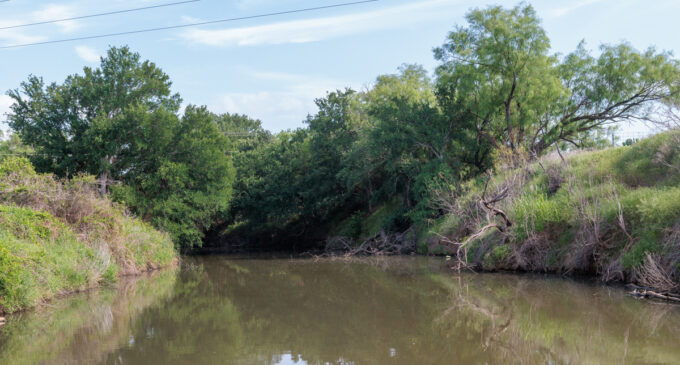
Cutline top photo: The area of Gunsolus Creek pictured above is located north-northeast of Breckenridge and has been affected by the discharge of partially treated wastewater after a clog at the treatment plant. (Photo by Tony Pilkington/Breckenridge Texan)
Related story: